

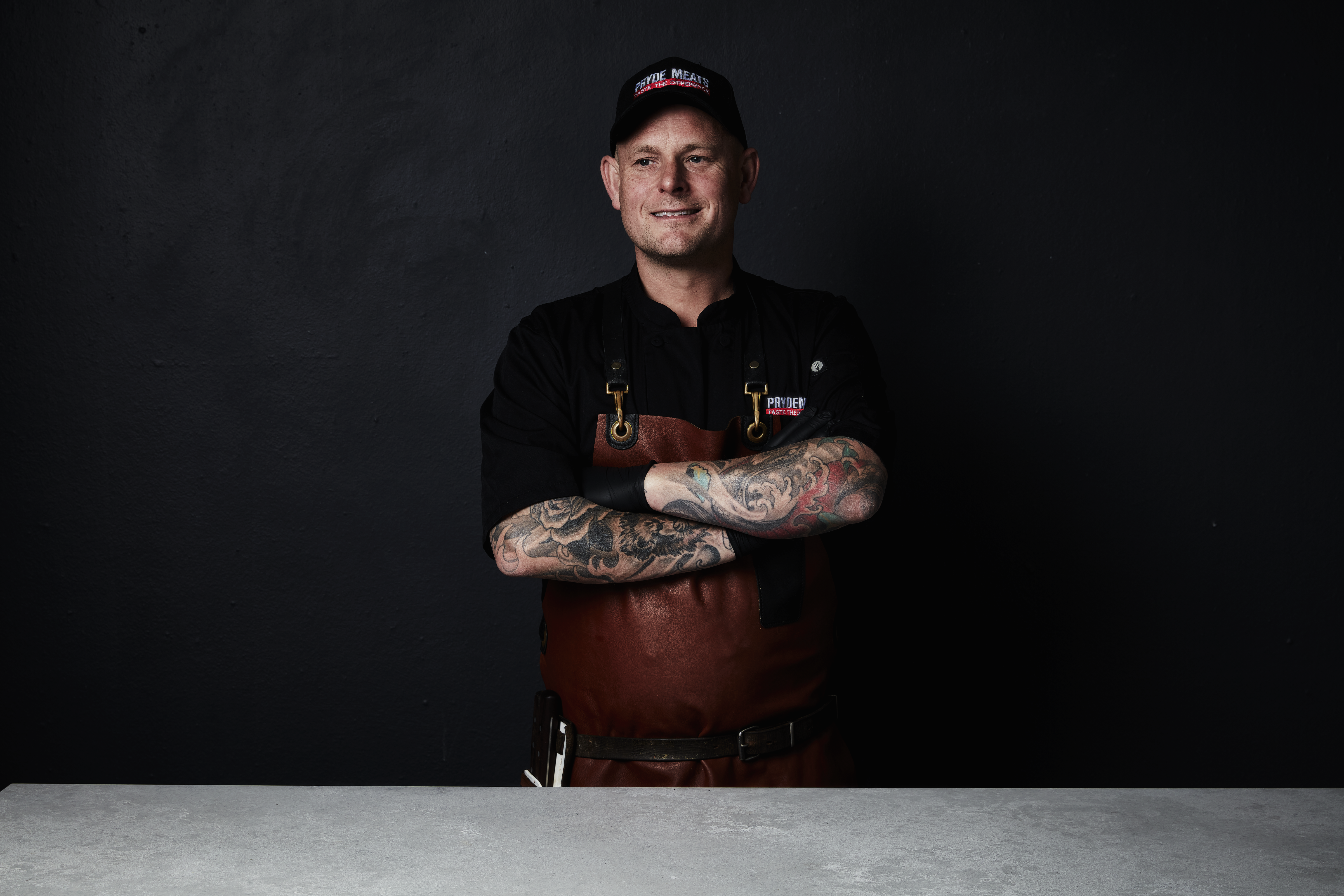
Brett Laws’ career is a strong example of what the modern butcher delivers to the red meat industry: greater value, stronger consumer engagement, and better utilisation of every carcass.
Today, as a two-time representative for Australia at the World Butcher Challenge, five-time Meatstock winner and member of the World Butchery ‘All-Stars Six’, Brett’s success highlights how skilled butchers can directly influence the performance of red meat in market.
As Brett says, “Traditional butchery focuses on breaking carcasses into standard cuts, but the modern approach goes further.”
Today’s consumer is looking for experience, convenience and flavour alongside the cut itself. That’s where butchers play a critical role.
Brett has built his reputation on taking beef and lamb beyond raw retail cuts and turning them into high-impact, inspirational value-added products. His offerings include ready-to-cook beef and lamb products, portion-controlled midweek meal solutions, flavour-led cuts aligned to global cuisines and visually engaging retail displays.
“These innovations drive sales and improve whole-carcass utilisation, ensuring more of the animal is used in higher-value applications,” Brett says.
Flavour as a value driver
Consumer behaviour has shifted. Purchasing decisions are increasingly driven by flavour, inspiration and ease of use, and red meat competes in a broader protein market where staying relevant matters.
Brett’s approach reflects this directly. By aligning products with evolving flavour trends, whether American BBQ, Asian-inspired marinades or Mediterranean profiles, he has been able to reposition beef and lamb in ways that resonate with modern consumers.
For producers, this is significant. When secondary cuts are transformed through flavour and format, they move from low-value outputs to premium, high-demand products.
Value-adding drives demand
Value-adding is a critical lever for the entire red meat supply chain. Through his work, Brett shows how underutilised cuts can be repositioned, how convenience increases purchasing frequency, how product differentiation drives margin growth and how ready-to-use solutions build consumer confidence.
Together, these create a stronger connection between the product and the end consumer and, ultimately, drive higher demand for beef and lamb.
Showcasing red meat on the world stage
International competition has become an important platform for demonstrating the capability of Australian butchers and the potential of Australian red meat.
Events such as the World Butcher Challenge put advanced cutting techniques, innovative product development and premium presentation of beef and lamb in front of a global audience. They reinforce the reputation of red meat as a versatile, high-quality product and showcase how modern butchery can elevate its value.
Why it matters
Every step between producer and consumer shapes the outcome for red meat. Butchers sit at a critical point in that supply chain, translating carcasses into products that people want to buy, cook and eat.
When butchers innovate, the benefits flow through the system: improved carcass balance, increased retail performance, stronger consumer engagement and higher overall value per animal.
The opportunity for the industry is clear: red meat needs to be presented in ways that match how people eat today. That means leading with flavour, emphasising convenience, creating differentiation at retail and continually evolving product formats.
Brett’s career shows what happens when those elements come together. While his success has been built on technical skill, he also has the ability to adapt, innovate and create value from red meat.
The bottom line
Butchery has evolved. Today it encompasses product development, consumer insight and value creation alongside traditional skills.
For the red meat industry, that evolution is critical. Because the more effectively beef and lamb are transformed at the retail level, the greater the return across the entire supply chain.
And that starts with skilled butchers who understand how to bring red meat to life.