

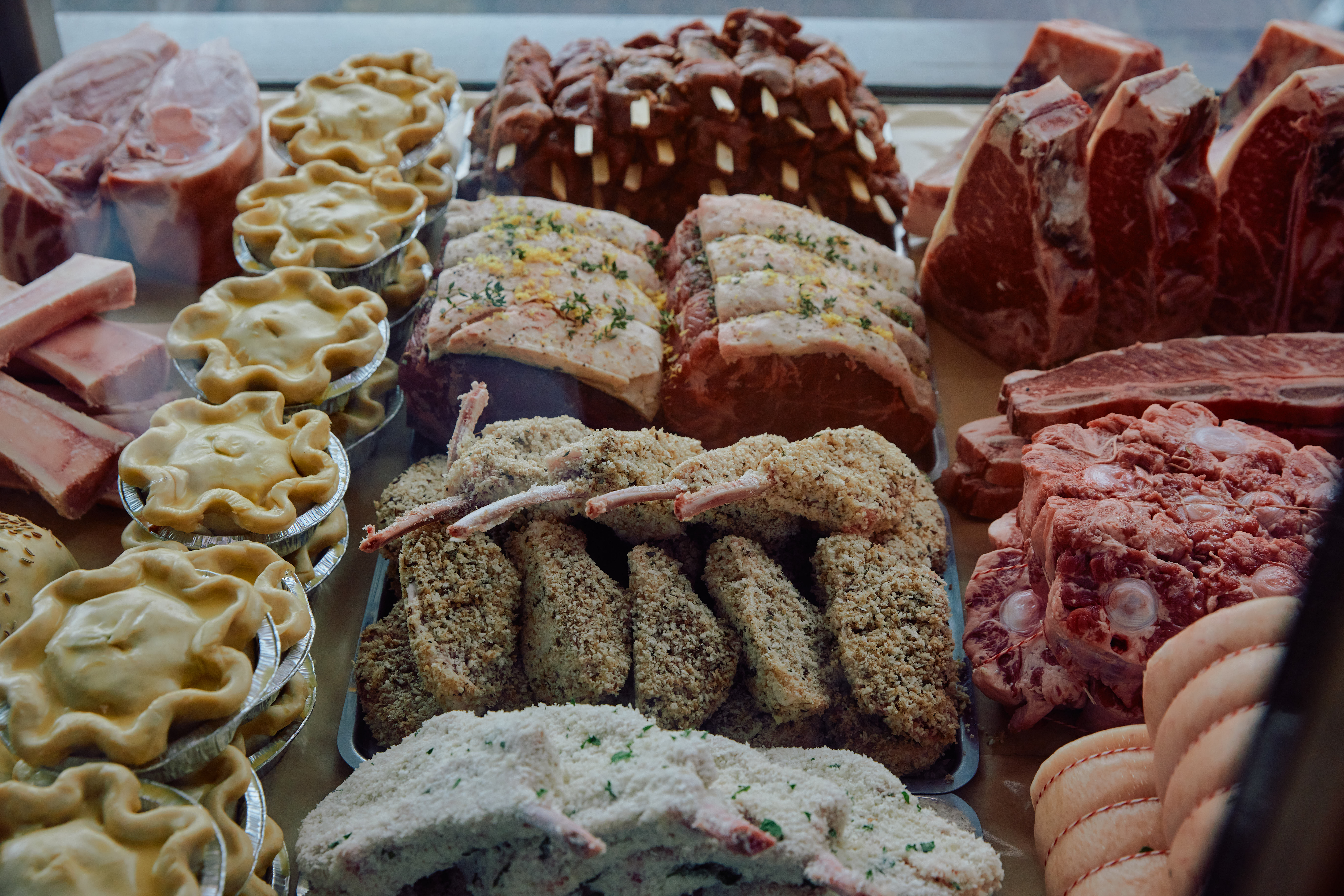
When it comes to value-added products, few butcheries in Australia do it with as much intention as Meatsmith. With four retail locations across the city, the Melbourne-based butcher, co-owned by chef Andrew McConnell and butcher Troy Wheeler, has built a reputation for product that draws on traditional European butchery techniques and a deep respect for quality beef and lamb.
Justin Wade, Butchery Operations Manager, says Meatsmith’s philosophy around value-adding is an extension of their general business philosophy, which involves working with small farmers, heritage breeds and stocking as much local produce as possible.
“Our model is sort of a traditional European Australian style butchery. We draw a lot from French butchery, English butchery, Italian style, when we’re looking at making value-added products,” Justin says.
“For us, it’s about drawing from food culture; not so much trends, but things that we know will work. It might be dishes that restaurants are doing, a recipe from an old French chef’s cookbook, personal experiences from travel, staff input... We basically draw from all of that to create our range of value-added products.”
For Justin, the best value-added lines are the ones that give customers a number of options.
“We find those products are the best sellers for us, items that can be prepared a number of ways: barbecued, pan-fried or oven-baked,” he says.
A marinated lamb shoulder is one of Meatsmith’s standout examples. Boned out, gristle removed and finished in a simple paprika, garlic and herb marinade with fresh herbs and sliced garlic, it works on the barbecue as an easy alternative to a whole leg. Cooked for 15 to 20 minutes, flipping every few minutes, then sliced thin. It also slow roasts beautifully for shredded lamb. One product, multiple outcomes.
On the beef side, Meatsmith makes paupiettes, a French preparation of thin-sliced, bashed-out centre of rump wrapped around a flavoured farce, typically beef and onion sausage meat or beef, jalapeño and cheese. They are simple to finish in the oven in around 25 to 30 minutes, and a good example of how technique can transform a familiar cut into something that feels special.
Where ideas come from
Meatsmith’s product range is driven by food culture rather than trends: cookbooks, restaurant dishes and staff travel are all sources of inspiration.
The process is deliberate: a small batch is made, the owners taste it and, if it gets the green light, it’s costed and trialled with customers. It keeps the range fresh without chasing fads.
“I wouldn’t advise not to look into trends,” Justin says, “but just make sure it’s done right.”
Don’t overcomplicate it
The most common mistake Justin sees is overloading a product.
“Some of the best stuff is as simple as choosing fresh ingredients, fresh, clean, tasty and cook well,” he says. He believes that adding too many elements can dilute the product, rather than improving it.
Plan around the whole carcass
The impact of value-adding reaches beyond the customer-facing product into how a shop runs. At Meatsmith, product decisions are driven partly by what the carcass data is telling them.
“We’re looking at what’s selling, what’s not, what we’re using from the carcass and what we’re not,” Justin says. “If a particular cut is building up, that’s a prompt to develop something new.” Meatsmith’s wagyu pastrami is a case in point; sold sliced at the counter, the end cuts go into a smoked brisket pie, one of the shop’s best sellers.
Customers respond to trust
Meatsmith’s focus on traditional, well-executed product over novelty has built something harder to manufacture customer loyalty. Around 30 to 40 per cent of customers, Justin says, will try something new simply because they’ve learned to trust the range.
“They come in and they’re like, yep, I know it’s going to be good.”
Nostalgia plays a role too. Products rooted in classic preparations – Italian, French, Spanish – resonate with customers who grew up eating that way.
“People come in and say to us, ‘I had that as a kid’ or ‘My parents were from Italy and always talked about this, but I’ve never been able to find it here.’”