

The $350 lamb carcase: extracting every dollar of value
For Steve Hack, getting the most out of a whole lamb carcase comes down to a range of small decisions, rather than a single factor. These decisions include how the animal is broken down, what happens to the cuts that don’t sell themselves, and how the product is presented to the customer.
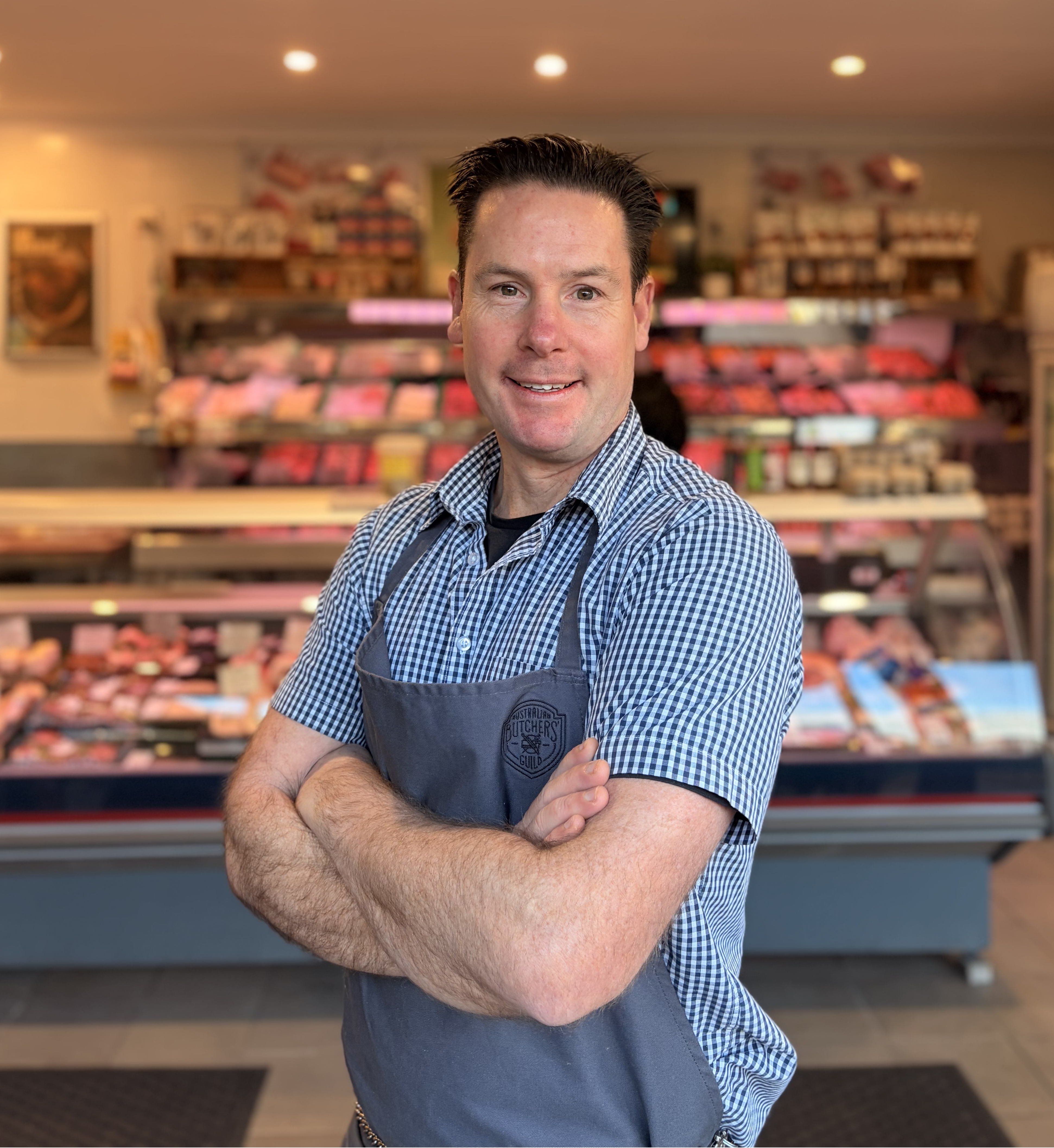
Steve has spent close to 30 years at the one butcher shop, Humberston’s Gourmet Meats in Sydney’s Lane Cove. He started as a wash-up kid at 16 and served his apprenticeship under Peter Hummerston from 1996. He later took over ownership in partnership with fellow butcher Mark McKinnon and, following Mark’s retirement in 2022, has run the store as sole owner.
Getting the breakdown right
Steve’s approach starts with buying the whole lamb. Buying without the forequarter or shoulder pushes the price per kilo up, so he says ordering the complete carcase and using all of it is the most economical approach. From there, the breakdown itself matters.
“When you’re breaking your lamb, you’ve got to really concentrate on utilising the cutlets, so making sure it’s all square from the forequarter,” he says. “When separating the cutlet from the loin, you’re making sure that there’s a bit of tail left on the loin, but then the cutlet still has the bone on it.”
“Those little details can make you another $10 or $20 per lamb, just because you’ve done it right.”
Turning cuts into value
Loins, chumps and forequarters move easily, largely because Steve’s shop is known for its slow-roast lamb shoulders, trimmed properly and sold with cooking instructions. Legs are a different story. As the slowest-moving cut, they need creative handling. He prepares a diced Moroccan lamb with a complimentary tin of tomatoes in winter, and kebabs and lamb steaks in summer. Shanks have slowed in popularity this year, so Steve now pre-cooks them in a pressure cooker with red wine jus, carrot, onion and celery, ready for customers to heat and serve.
Steve puts cooking times on every ticket. He tries to gauge what each customer needs, rather than pushing value-add products on everyone who walks in. He says he might steer a family of five towards a shoulder or a leg, while a couple might do better with a 400g lamb rump.
“You don’t want to be changing people’s minds when they come in with an idea of what they want. We want to work with them, not against them,” he says.
For busy trading days, he focuses on preparation. Legs are boned, portioned into primal’s and vacuum-packed ahead of the Thursday to Saturday rush, so staff aren’t breaking down a leg while a customer waits.
Steve’s advice for retail butchers wanting to lift value from lamb without overcomplicating production comes down to a few habits: put cooking times on everything, explore what the customer needs before suggesting alternatives, and prepare ahead for peak days rather than working under pressure.
“And presentation,” he says. “Our shop has been known for its presentation for more than 50 years. It’s not something you can afford to ignore, especially when you’re trying something new.”